
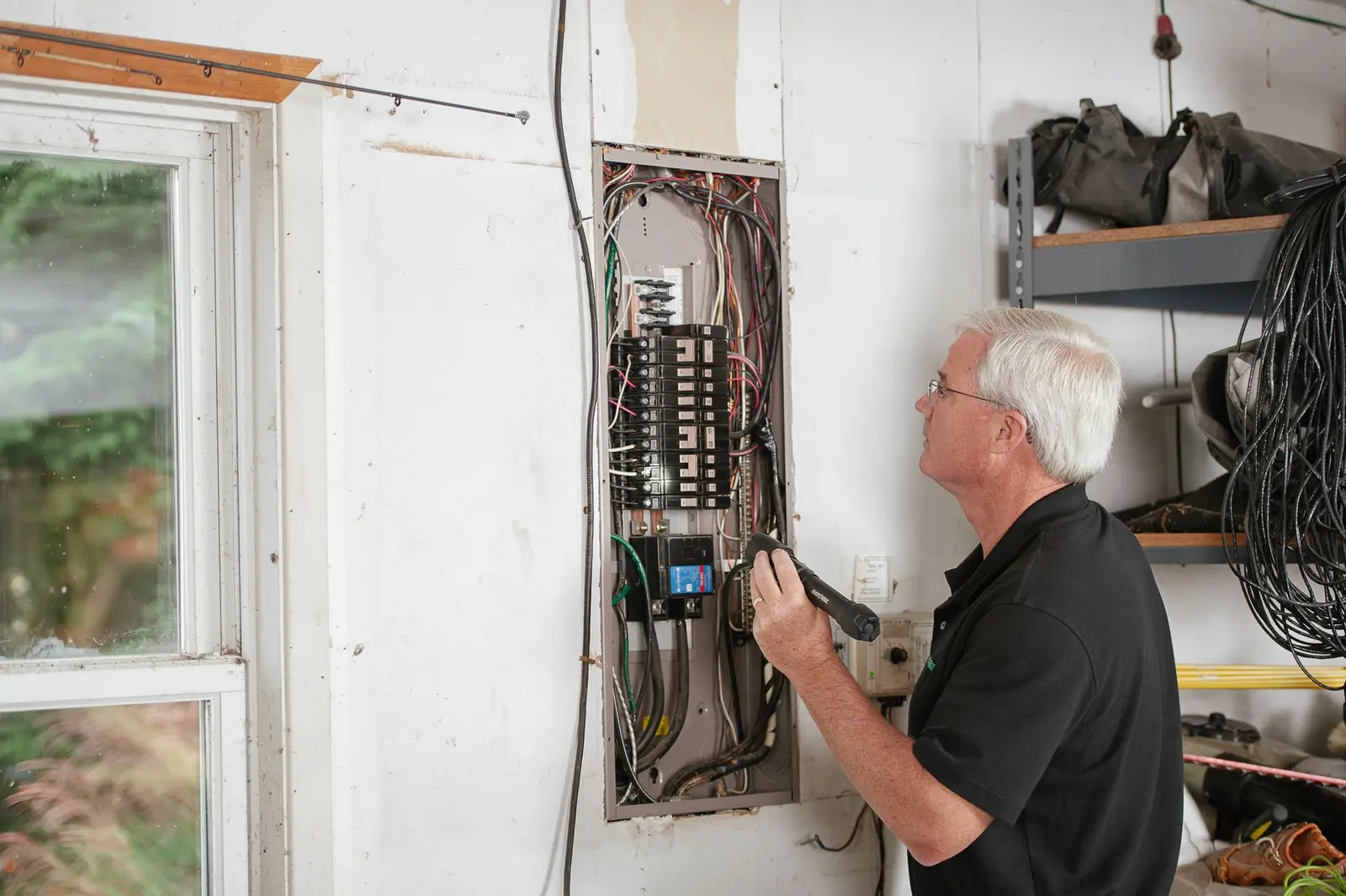
A well-maintained electrical system is the foundation of home safety. In Georgia, especially in older buildings, aging aluminum wiring and overloaded breaker panels are frequent causes of short circuits and fires. Before calling a professional, here is a systematic approach to help you assess the condition of your home's system.
Diagnosing Danger: When Is Immediate Help Needed?
Before starting any work, pay attention to "red flag" signs. If you notice even one of the following, the problem is serious and requires a qualified electrician immediately:
- Unusual buzzing or humming noises coming from the electrical panel.
- Switches or outlets that feel warm to the touch during use.
- Flickering lights or voltage fluctuations when you turn on appliances.
- The smell of burning rubber or plastic near outlets.
- Frequent "tripping" of circuit breakers.
These signs are not cosmetic, and ignoring them carries significant risk. Do not attempt to dismantle faulty components yourself, as electrical safety requires specialized tools and expertise.
Professional vs. DIY: Risk Assessment
| Criterion | Professional | DIY (Amateur) |
|---|---|---|
| Diagnostics | Using precise instruments | Visual inspection |
| Safety Standards | Full compliance | High risk |
| Quality Guarantee | Guaranteed accountability | Unstable results |
Factors Determining Cost
The price of electrical work depends on more than just square footage. In Georgia, costs vary based on complex components:
- Wall Material: Cutting channels in concrete walls requires more time and resources than in brick or drywall.
- Wiring Type: High-quality copper cables are more expensive, but their service life is measured in decades.
- Smart Home Features: Integrating intelligent control systems increases both the complexity of the work and the cost.
Inspection and Preparation
Before requesting a specialist through the "sheniani" platform, ensure you have:
- A floor plan of your apartment or house indicating the location of outlets and the electrical panel.
- A list of major appliances (washing machine, air conditioner, electric oven) that create high loads.
- A list of questions regarding future capacity, for example, if you plan to purchase additional appliances.
Ask the specialist to test the completed work and inquire about the quality of the materials used. Remember, a low price often hides poor-quality materials or unprofessional workmanship. Don't hesitate to ask questions—safety is an investment that protects your home.